

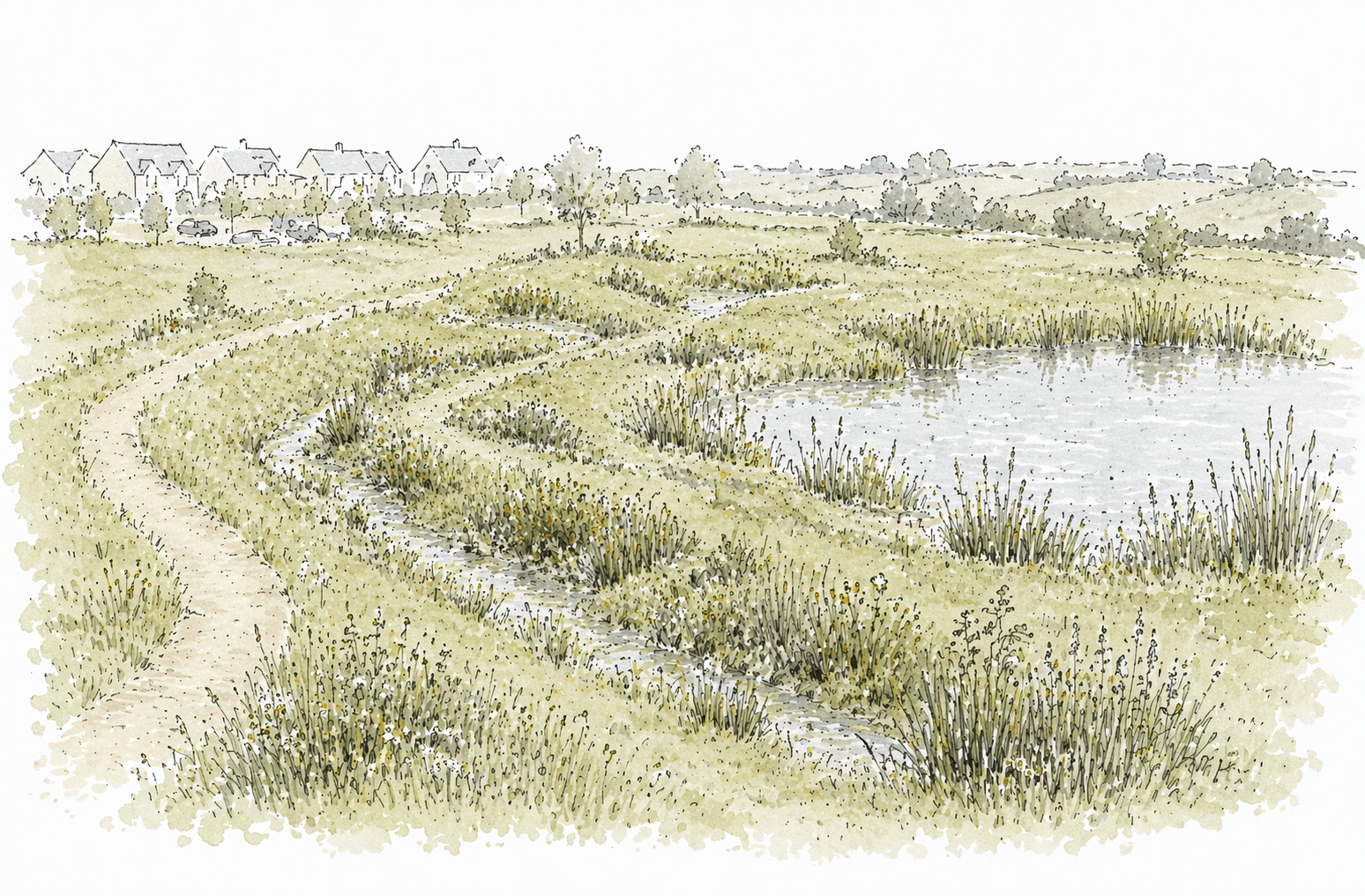
Defra’s National SuDS Standards, introduced in summer 2025, replace the previous non-statutory technical standards and mark a clear shift in how sustainable drainage is considered within the planning process. Local planning authorities are already using this change to place greater emphasis on SuDS as a core requirement for approval – something that is understandably creating a degree of concern for developers.
At its core, sustainable drainage (SuDS) is about managing rainfall in a fundamentally different way. Rather than relying on traditional piped systems and centralised discharge, SuDS takes a more natural, decentralised approach—encouraging water to be managed as close to where it falls as possible. This means prioritising infiltration, storage and gradual conveyance, with runoff only moving through the system when necessary, ultimately reducing pressure on downstream infrastructure and improving environmental outcomes.
This series of articles is designed to help you navigate that shift. Every Monday, for the next seven weeks, we will break down each of the seven National SuDS Standards, explaining what they require in practice, why they matter, and how you can shape your development proposals to achieve compliance without unnecessary redesign, delay or cost.
This week we’re kicking off with Standard 1.
SuDS Standard 1: Runoff Destinations
Ever wonder why your SuDS design was rejected? Standard 1 is often the culprit.
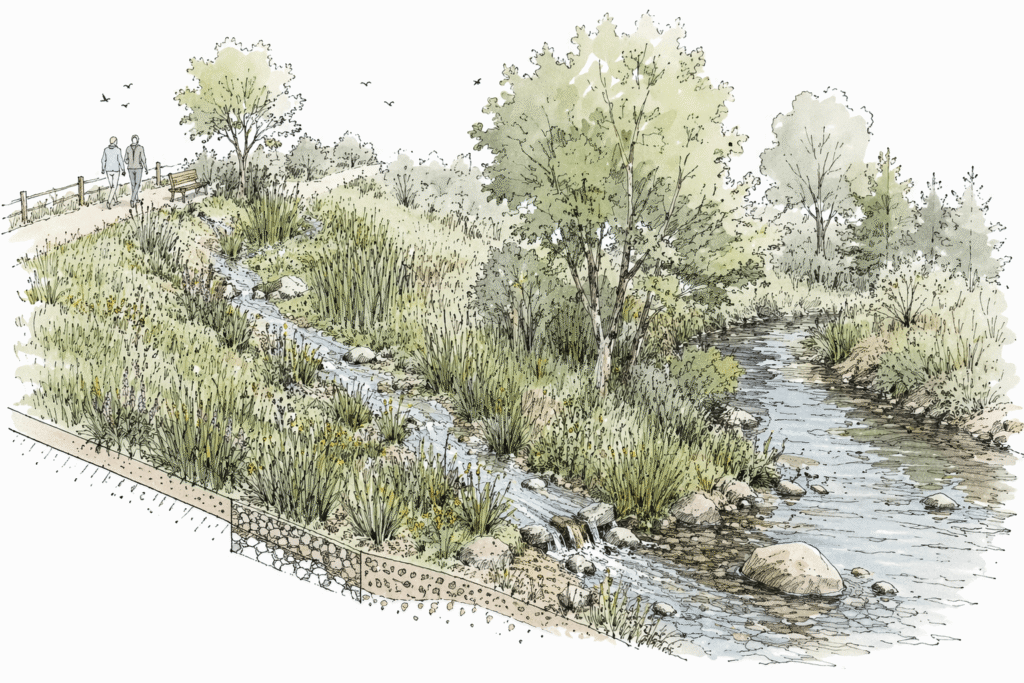
Where should rainwater go? Standard 1answers this with a clear hierarchy. And it’s stricter than you might think.
The runoff destination hierarchy works like this:
1. Rainwater harvesting
2. Infiltration (soakaways, trenches)
3. Watercourses
4. Surface water sewers
5. Combined sewers (last resort)
Why this matters:
Choosing the correct discharge destination is a core compliance requirement. Planning authorities expect clear, evidence-based justification for each step of the hierarchy. Failure to demonstrate why infiltration or watercourse discharge isn’t feasible is one of the most common reasons for objections.
Getting this right early reduces redesign risk and avoids costly late-stage drainage revisions. Incorrectly defaulting to sewers can trigger capacity objections from water companies and lead to objections from the LPA.
What you need to know:
You need robust early-stage ground investigation: BRE 365 infiltration testing, possibly groundwater monitoring through wet months, contamination risk assessments, and utilities/services constraints. Document each rejection of the hierarchy with clear, defensible evidence.
Plan for the cost, time and logistics of site investigations and secure land or easements if outfall connections are required. Incorrect assumptions early on can lead to costly redesign and delays.
Site layout must preserve areas suitable for infiltration and provide realistic gravity falls to discharge points. Building placement and levels must not sterilise infiltration zones or force reliance on sewers.
Click here for more information on our solutions to sustainable drainage and how we can help you.