

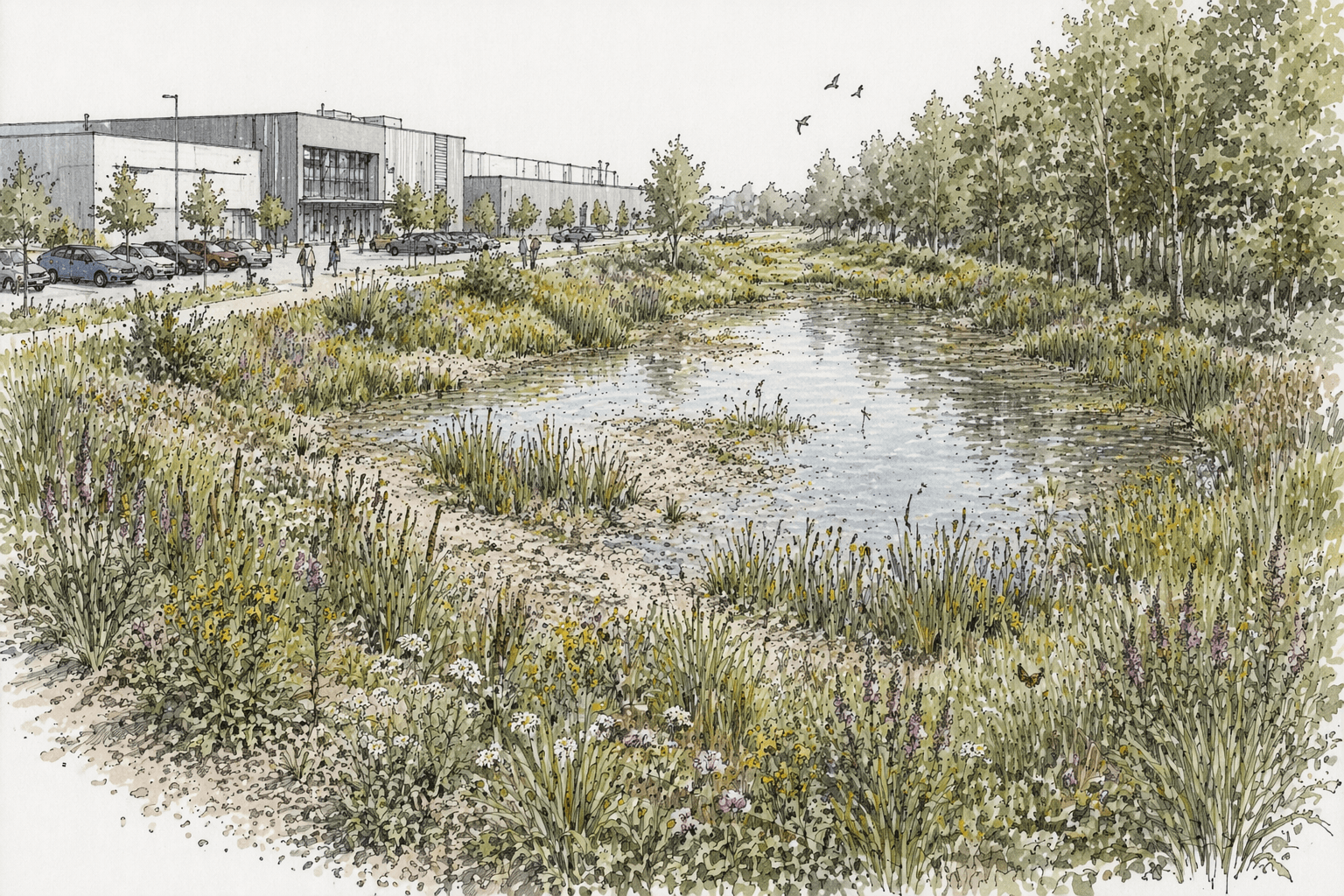
Welcome to week six, the penultimate in our series exploring Defra’s new National SuDS Standards.
Standard 6: Biodiversity requires designs that support biodiversity through native planting, habitat features and naturalised water environments.
With Biodiversity Net Gain now mandatory, your SuDS strategy is also an ecology strategy.
Why This Matters:
SuDS are now expected to deliver measurable habitat improvements rather than simple engineered voids. Poorly designed systems can fail BNG calculations, trigger planning delays, or require re-designs with new planting strategies.
Biodiversity-rich SuDS help offset development impacts, support species resilience and contribute to wider ecological networks.
Examples:
• Wetland basins planted with native marginal vegetation.
• Wildflower swales providing pollinator habitat.
• Ponds designed with varying depths and gently sloping edges for wildlife.
What You Need to Know:
Integrate ecological functionality from the start including native species selection, varied depths and microhabitats, shelter features and connectivity to wider ecological networks. BNG calculations must reflect SuDS habitats appropriately.
Consider long-term stewardship, planting establishment periods, and maintenance costs. Biodiversity features that are poorly designed or underfunded can fail BNG obligations, leading to planning delays.
Planting structure, water-edge treatments and landscape geometry must be designed to support habitat creation. Visual quality should align with ecological intent. Think naturalised, not overly formalised.
For more information on our sustainable drainage solutions and how we can help you, click here.