

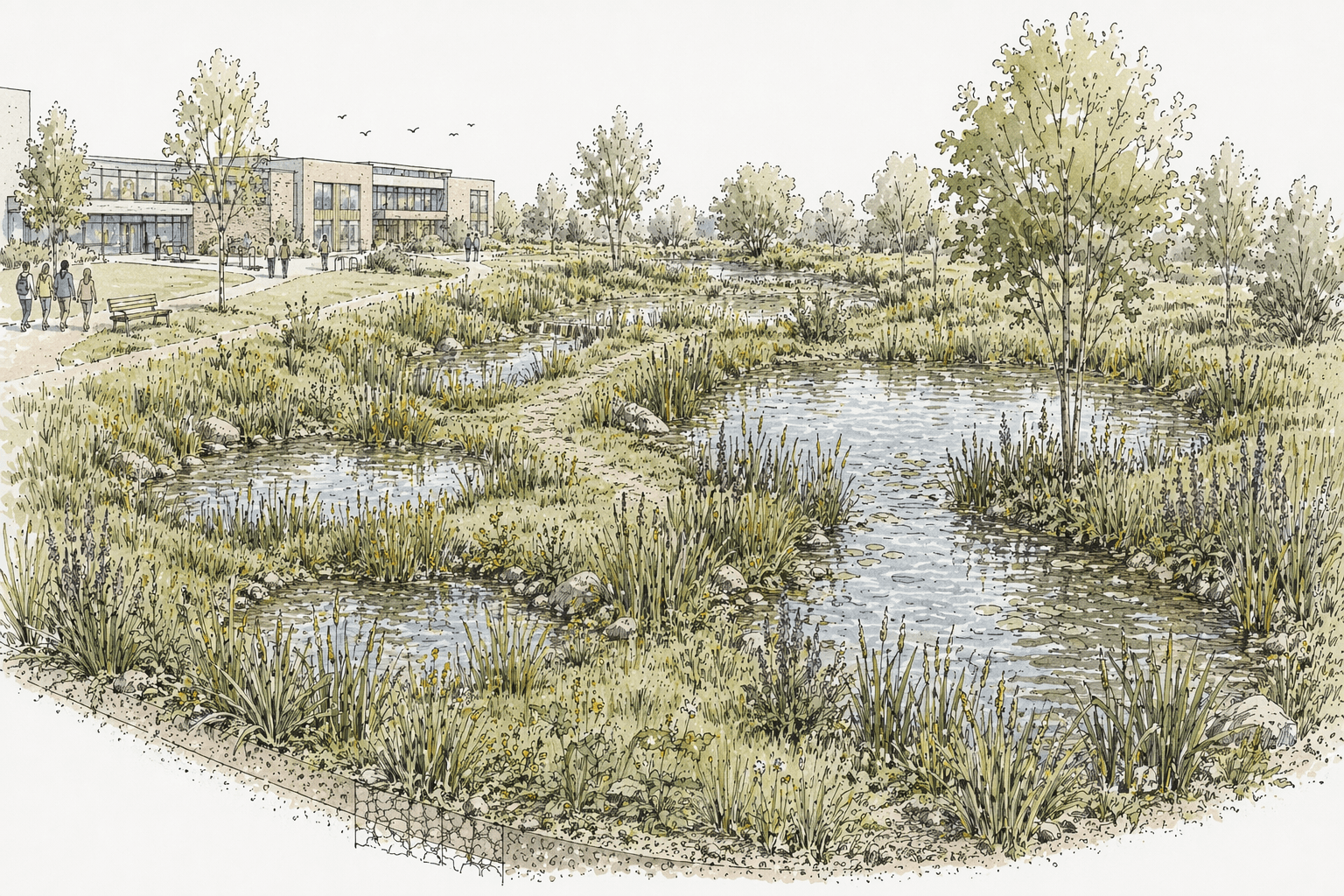
We’re on week four of breaking down Defra’s new National SuDS Standards, with this week taking a closer look at Water Quality.
Pollution control is no longer optional.
Standard 4 requires SuDS to improve runoff quality before it leaves your site.
This standard requires a treatment train approach whereby multiple features work together to remove pollutants based on your site’s pollution risk.
Why This Matters:
LPAs expect a treatment train aligned with land-use risk. Insufficient treatment can block planning approval or require costly redesign.
Without adequate treatment stages, developments risk releasing hydrocarbons, fine sediments and nutrients thus increasing maintenance burdens and long-term environmental liability. Poor water quality design also contributes to the failure of ecological targets and impacts receiving water bodies.
Treatment Train Examples:
• Permeable paving → first-stage filtration for car parks.
• Swales → capturing sediment and hydrocarbons from roads.
• Ponds → removing nutrients and total suspended solids before discharge.
What You Need to Know:
Plan multi-stage treatment trains tailored to land-use pollution risk (parking, loading bays, highways). Show treatment effectiveness through CIRIA SuDS Manual indices and avoid short-circuiting or bypass risks.
Inadequate water quality design may trigger environmental permitting, redesign of drainage layouts or additional SuDS features. Pollution hotspots (refuse stores, commercial yards) need special attention early on.
For more information on our sustainable drainage solutions and how we can help you, click here.