

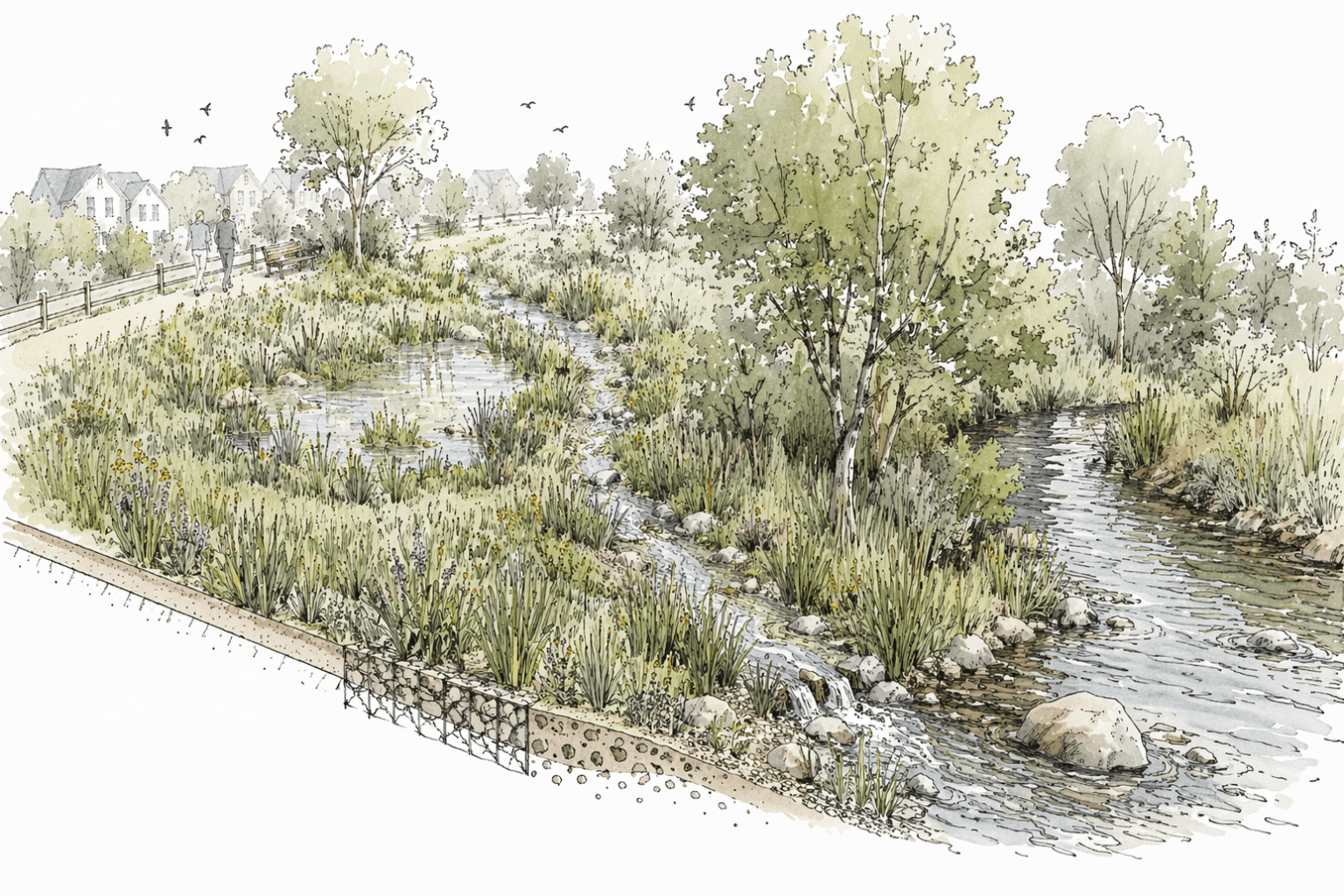
Every Monday we’re delving into Defra’s National SuDS Standards, unpacking what each of the seven standards require in practice, why they matter and how developers can shape their proposals to achieve compliance without unnecessary redesign, delay or cost.
Week two looks at Standard 2: Managing Everyday Rainfall (Interception).
Most pollutants arise from everyday rain rather than large storms. Standard 2 tackles this by managing rainfall at source using multiple small-scale features: permeable paving, rain gardens, green roofs and bioretention planters.
Why this matters:
If interception isn’t provided, developments can degrade downstream water quality, increase baseflow pressures on the drainage network and lose the hydrological benefits SuDS are meant to replicate.
Authorities now expect quantified interception storage, not just token features. Missing interception often leads to planning objections.
What you need to know:
Standard 2 includes a requirement for a detailed quantitative assessment of drained areas and interception size and interception volume. Importantly, some suds features, such as ponds, don’t contribute to interception volume.
Incorporate distributed SuDS close to source (green roofs, permeable paving, bioretention), while demonstrating that interception volumes are achieved. Coordinate with landscape and utilities teams early to avoid conflicts.
Check-in next week as we delve into SuDS Standard 3: Managing Extreme Rainfall & Flooding.
Click here for more information on our solutions to sustainable drainage and how we can help you.