

Since the beginning of 2026, the UK has experienced over 50 consecutive days of rain, leading to significant rises in river levels and widespread flooding across the country. The prolonged rain has placed enormous pressure on our rivers, with the Thames catchment particularly affected.
Our Engineering team has continued with the inspection workstream throughout this period, conducting Visual Asset Inspections (T98s) and Public Safety Risk Assessments (PSRAs) on behalf of the Environment Agency. During recent inspections, they observed exceptionally high water levels along the Thames which have begun to obscure assets and prevent access to many sites.
One of our Flood Risk Management Engineers, Alex Spittle, carried out a PSRA inspection at Culham Lock, where the conditions were especially severe. As shown in the images, the lock gates are completely submerged, with only the upper edges of the lock chamber and walkway still visible. These flooded structures pose heightened risks both to the public and to those conducting inspections, reinforcing the importance of wearing life jackets when working within 3m of the watercourse. Similar scenes are being experienced across the entirety of the catchment.
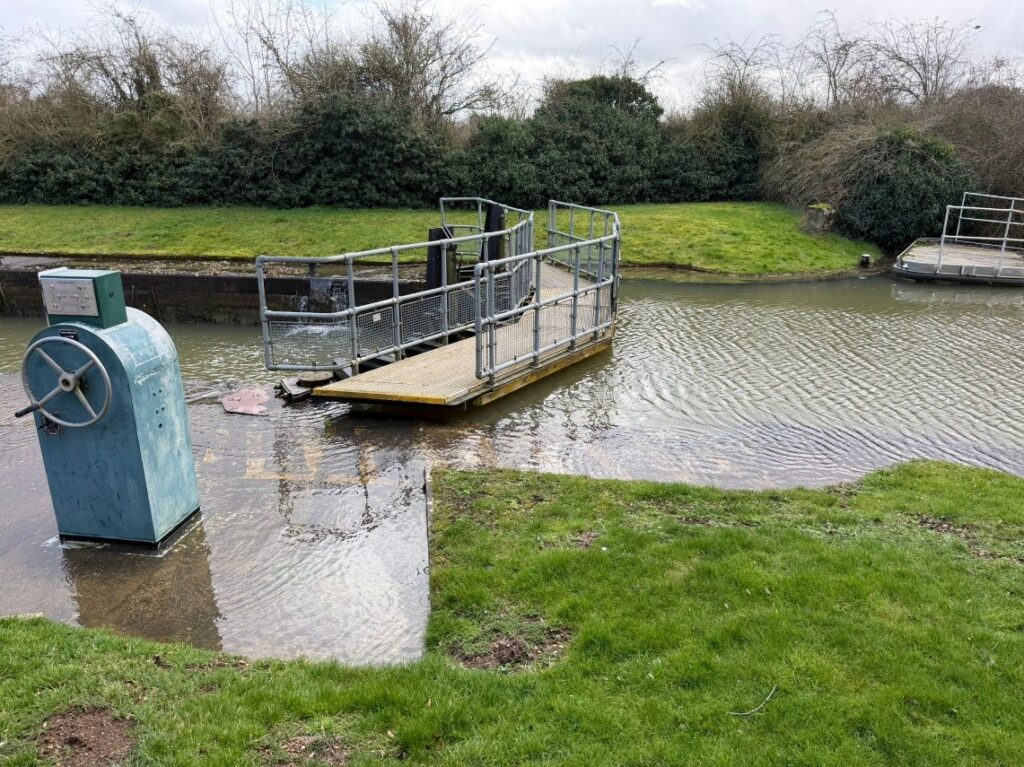
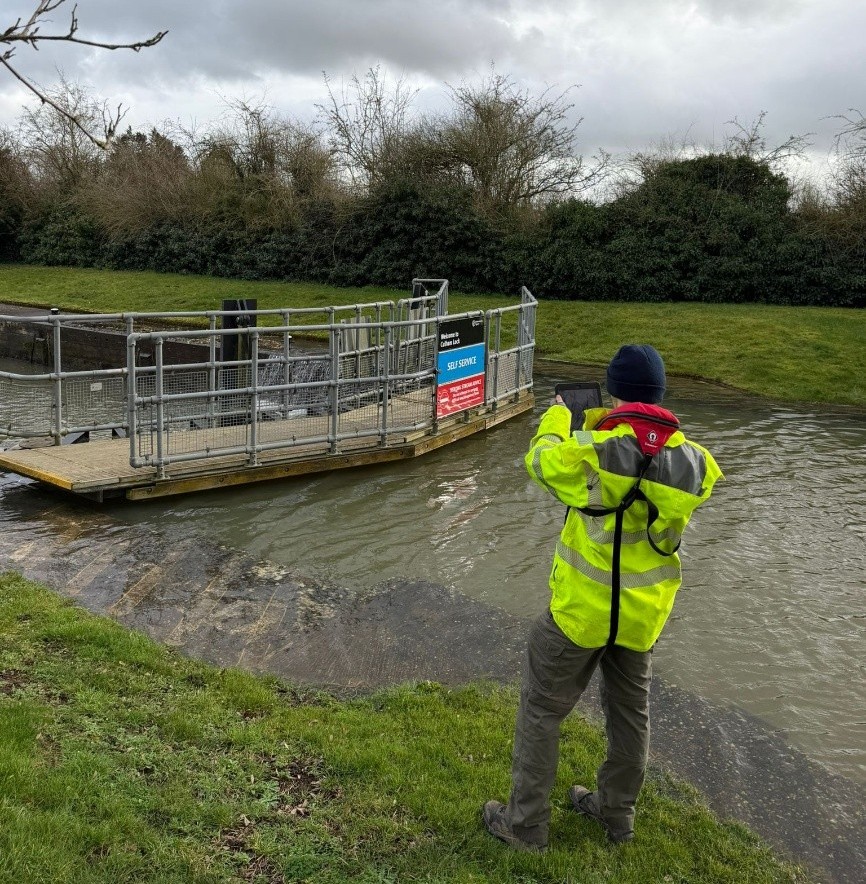
During this inspection, Alex identified a new underwater structures hazard, emphasising how dramatically a site’s appearance and risk profile can change in flood conditions. Understanding these evolving risks is essential to safeguarding both the public and staff working to inspect and maintain our rivers.
Red Boards Issued Across Thames Lock Sites
Due to the extreme conditions, the Environment Agency has issued “Red Boards” at all lock sites along the Thames, and these continue to be in place. These warnings inform river users of high, fast-flowing water and discourage navigation due to unsafe conditions. An example of one of these caution boards can be seen displayed on the lock gate in the images which indicates a red caution for ‘strong stream.’ More information about the types of boards and what they mean for navigation can be found on the Environment Agency website.
Flooding Delays Essential Inspections
High water levels and flooding not only create safety hazards but also delays inspection work, with many asset elements and public safety control measures becoming temporarily submerged and unable to inspect. This has particularly been the case for footbridges, moorings, landings/laybys, and full lock chambers. River gauge data is showing a slow decline; however, many places are still at extremely high levels. As we come to the end of the financial year, inspection deadlines become increasingly tight. The Thames is known for taking a considerable amount of time to drop back to normal levels after major flood events, and once water levels drop, asset damage is likely to be evident.
Our team is experienced in undertaking post‑flood inspections, ensuring that any defects or failures are quickly identified and documented to inform work orders. We offer asset inspection and cataloguing services to councils and organisations responsible for these structures, which is important following significant flood events to ensure damage is rectified to stop further failure. We also support clients with design and repair options for structures and riverbanks affected by flooding.
If you have questions about this post or would like to learn more about our inspection and engineering services, please get in touch – we remain dedicated to increasing resilience and reducing flood risk in the places we work, live and play.
Further information on the resilience and flood risk services that RAB provide is available on this website, or you can also get in touch by email (enquiries@rabconsultants.co.uk ) or call our head office in Lichfield on 0330 223 6475.