
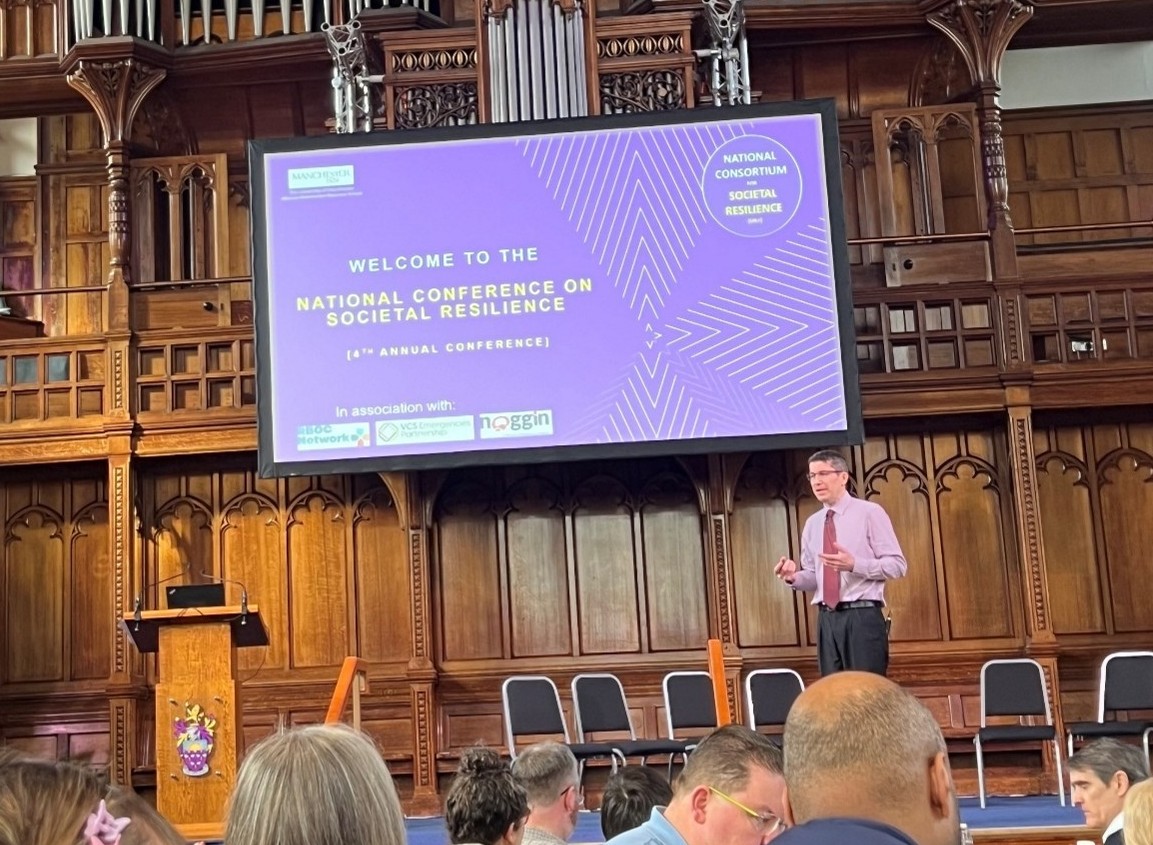
Last week, our Assistant Resilience Consultant, Ben Swannack, attended the fourth National Conference for Societal Resilience, led by Duncan Shaw and the National Consortium for Societal Resilience (NCSR) at the University of Manchester. It was an eye-opening and influential experience that offered valuable research, presented through case studies, expert panels, and scenario discussions within the world of societal resilience.
The first day opened with a session delivered by Martin Purham, which highlighted the importance of working with young people, and taking effective approaches to engage in the context of resilience. The session discussed practitioners “approaching with curiosity” and framing conversations around resilience in ways that are accessible and rooted in the lived experiences of young people. A key message was the need to move away from overly technical language and professional jargon, which can often dilute any meaningful dialogue. Instead of talking to, we should work with young people and focus on collaboration. This learning reinforced for Ben the value of engaging in an encouraging and empowering environment where we allow people to rise to the challenge to unlock their potential.
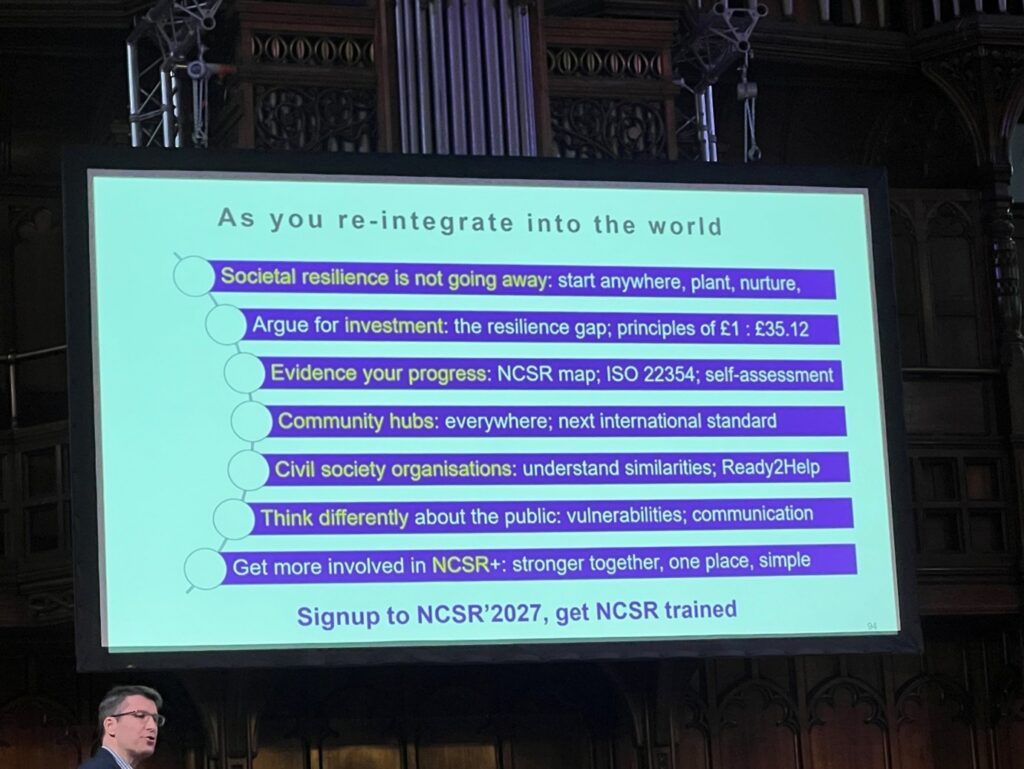
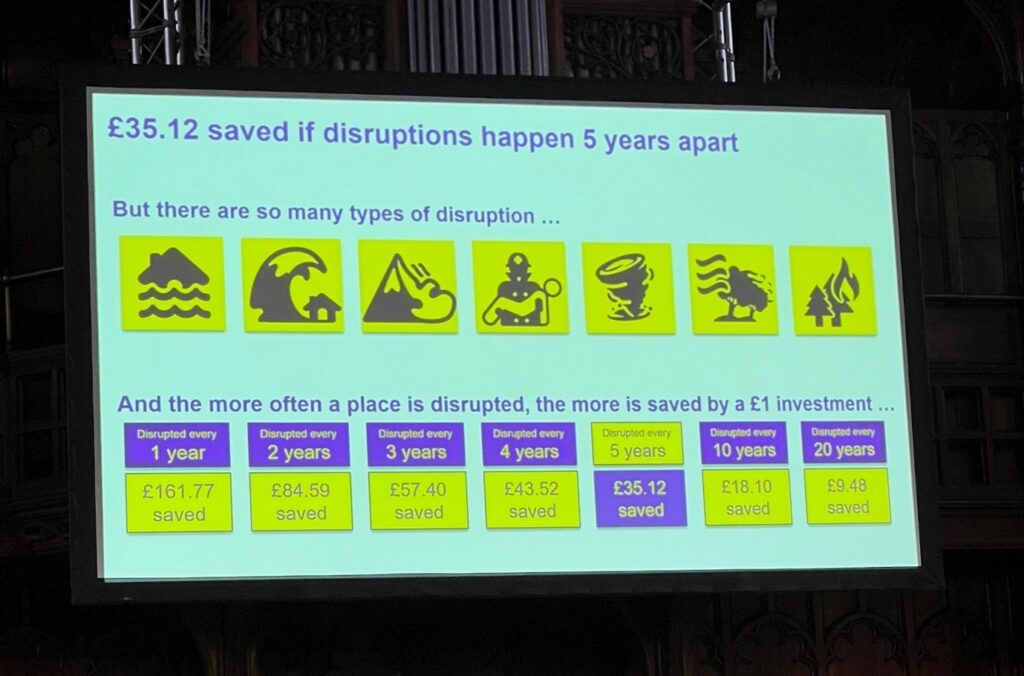
The second day started with Duncan Shaw and a presentation on the societal benefits of resilience, within a monetary value setting. The latest analysis from the NCSR showed that for every £1 invested into community resilience delivered £35.12 of public value. This was a powerful reminder that investing in resilience today can have a significant, and meaningful, return for the future.
Another session in Day 2 was delivered by panellists Bethan Morgan (Staffordshire Resilience Forum), Jesse Moon (Communities Prepared), and Melissa Kenney (Abri Housing Group) who explored how families have improved in their societal resilience. A key theme of the session was the importance of language, highlighting how resilience products and messages can become easily inaccessible if they type of language is not considered. Melissa Kenney from Abri, further shared her insights from a social housing perspective, outlining how Abri’s involvement in live incidents, tabletop exercises, and simulations has strengthened organisational response and improved resilience for residents. She referenced a case study at Castle Park View, where two fire incidents occurred only two weeks apart, which required full, out-of-hours, evacuations. A debrief after the second incident demonstrated a markedly improved response, driven by clearer communication, clarity on response structure, and delivering incident response with compassion. This reinforced how lived experiences can significantly improve resilience, and the way we can provide experiences within a safe environment is through regular training and exercising, which builds confidence and capability.
Ben also attended other sessions throughout the two days which included:
- Civil society in resilience to disruption – Operation Water Outage
- Communities in resilience to disruption
- The opportunity ahead and how we grab it
Concluding after the two days, the key learning was reinforced that societal resilience is here to stay, and it should be promoted as an investment for the future. There is a need to depart from typical way of talking about resilience as something that emergency services do, working with communities and establishing partnerships to unlock society’s potential to make itself resilient. When we collaborate, we are stronger.
So let’s collaborate!
At RAB, we have developed innovative ways to deliver engaging resilience services where we have collaborated with both public and private sector organisations, including training, exercising, resource change management, emergency management, and business continuity services. Use the Get in Touch option on the website, or email enquiries@rabconsultants.co.uk or call our head office in Lichfield on 0330 223 6475. Let’s build resilience together.