

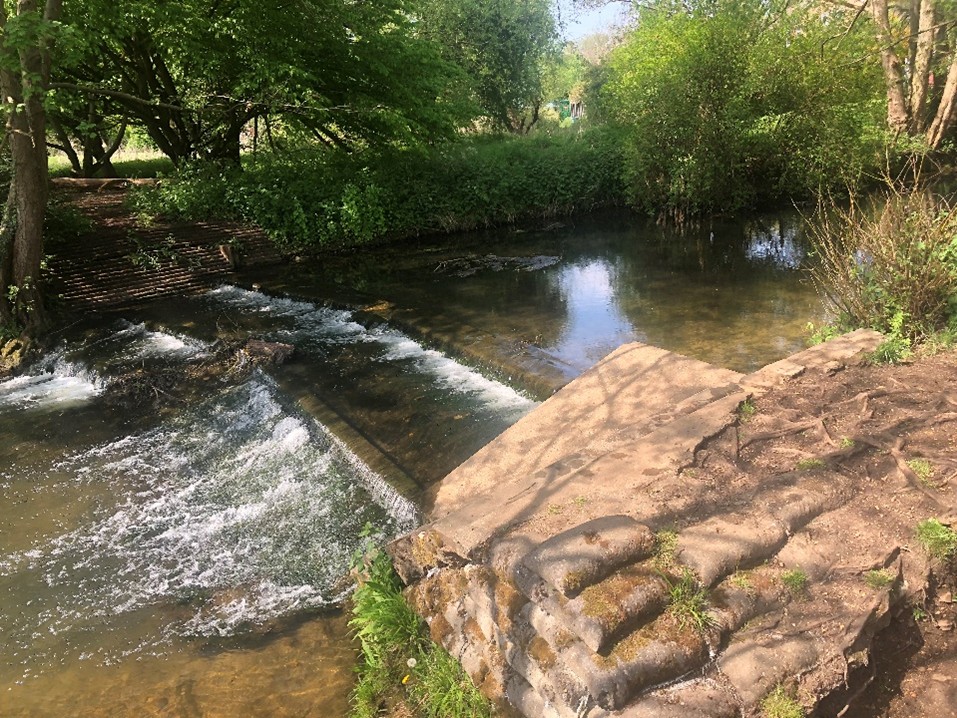
Hertfordshire County Council and the Environment Agency are undertaking a joint initiative to restore natural river processes and improve fish migration along the River Stort in Bishop’s Stortford, part of which includes the potential removal of the Grange Paddocks Weir. Earlier this year, RAB were commissioned to complete an Erosion Risk Assessment of a c. 300m reach of the river upstream of the weir, to assess the potential impact of its proposed removal.
The River Stort in Herefordshire is one of only 250 chalk streams in the world, 85% of which are located in south-east England. These incredible rare habitats are characterised by a diverse range of plants and animals, but are particularly sensitive and vulnerable to pollution, water abstraction and the increasing impacts of climate change.
Following the discovery of a population of water voles within the banks of the river, which rendered the original proposed hard engineered erosion protection approaches unsuitable, an Erosion Risk Assessment was necessary to inform the redesign of bank protection measures.
The assessment aimed to determine the erosion risk posed by the removal of the weir and the potential impacts on receptors adjacent to the river channel, including a number of residential gardens. It also evaluated the consequences of using ‘softer’ and more ecologically sensitive erosion protection methods.
Our methodology included:
- Ground assessments: A site walkover was conducted to visually inspect the bank structure, channel gradient and vegetation coverage. The walkover was also used to identify the sediment sampling locations. Areas of undercutting and bank instability were identified, particularly near some residential properties on the western bank.
- Sediment sampling: Eleven sediment samples were collected from the riverbed and banks along the reach upstream of the weir. Laboratory testing identified a range of sediment types, from organic silty clays to coarse chert gravels, with saturated densities varying between 1500–2300 kg/m³. The sediment characteristics were used to determine critical shear stress values – the point at which sediment may become mobilised and when erosion could begin.
- Hydraulic modelling: We adapted the existing hydraulic model to remove the weir and allow the changes in flow characteristics to be assessed. The model was run for a range of return periods, and flow depths, velocities, and boundary shear stress values were extracted from the model results to assess the changes in erosion potential following the weir removal.
- Expert judgement: We used our expertise of fluvial processes to interpret the model outputs, and to identify the areas with the greatest increases in boundary shear stress and the priority areas for erosion mitigation measures.
The modelling confirmed that boundary shear stress values would increase upstream of the weir as a result of its removal however, given the banks of the river are vegetated, impacts to bank stability and erosion risk to nearby properties and habitats was considered to be low.
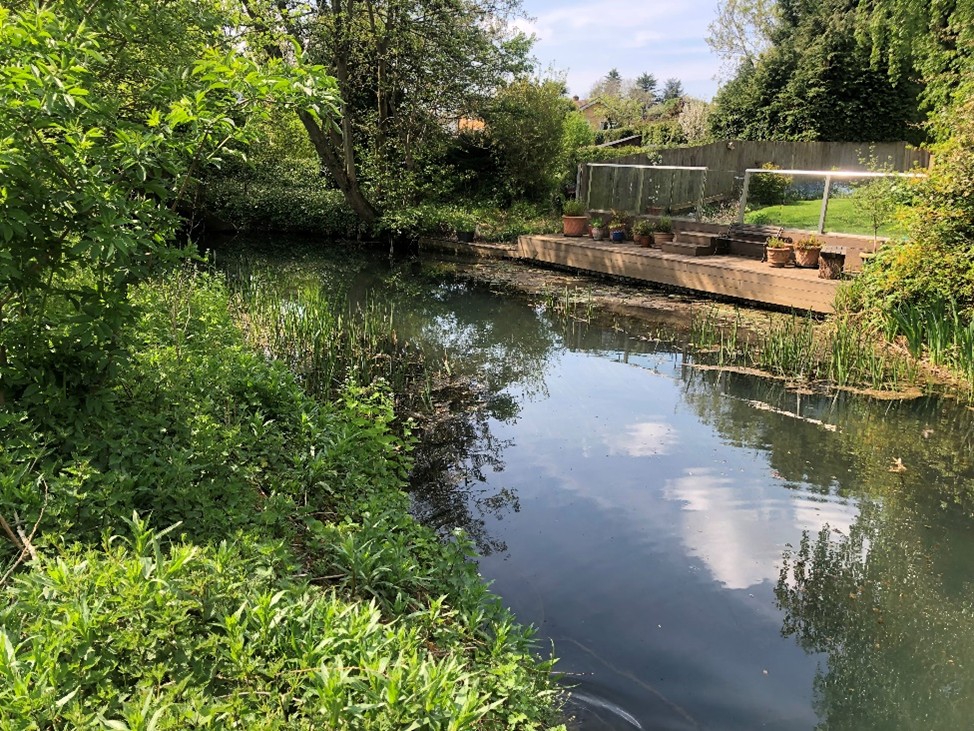
A range of engineered erosion protection were identified for Hertfordshire County Council and the Environment Agency consideration. Soft engineered options, such as coir rolls, willow spiling, and root wads, could be installed in the ecologically sensitive areas, particularly where water vole habitats must be preserved.
The assessment provided robust evidence to support a more ecologically minded redesign, balancing habitat protection with flood resilience and erosion protection. It will inform discussions with residents and the Environment Agency, ensuring that future works are both sustainable and sensitive to the site’s unique environmental constraints.
RAB provide a wide range of freshwater and coastal risk assessments, asset inspections and engineering services for both public and private sector organisations. More information is available here on our website, or you can get in touch for an informal discussion on your specific project by email to enquiries@rabconsultants.co.uk or call our head office in Lichfield on 0330 223 6475.