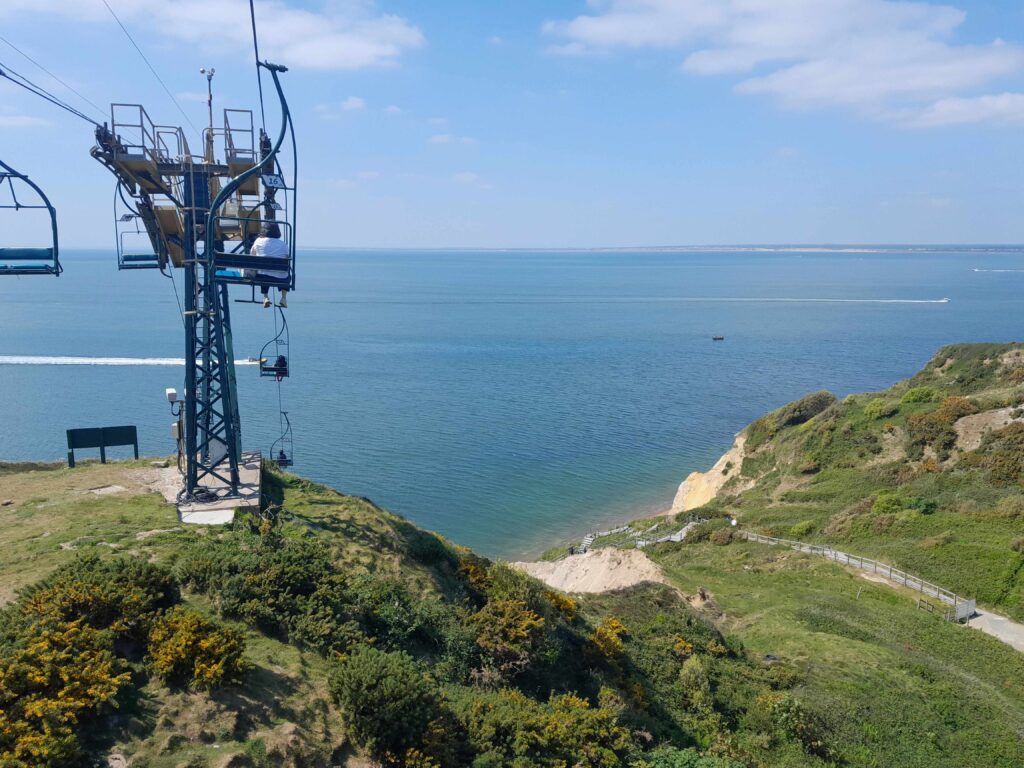

It will come as no surprise given the nature of our work that our teams enjoy being outside. In fact most of them love it!
Having said that, the UK weather will often have its say in proceedings, impacting when and where we are able to undertake certain services. However, every now and again, usually during the summer months, our pesky UK weather provides perfect fieldwork conditions.
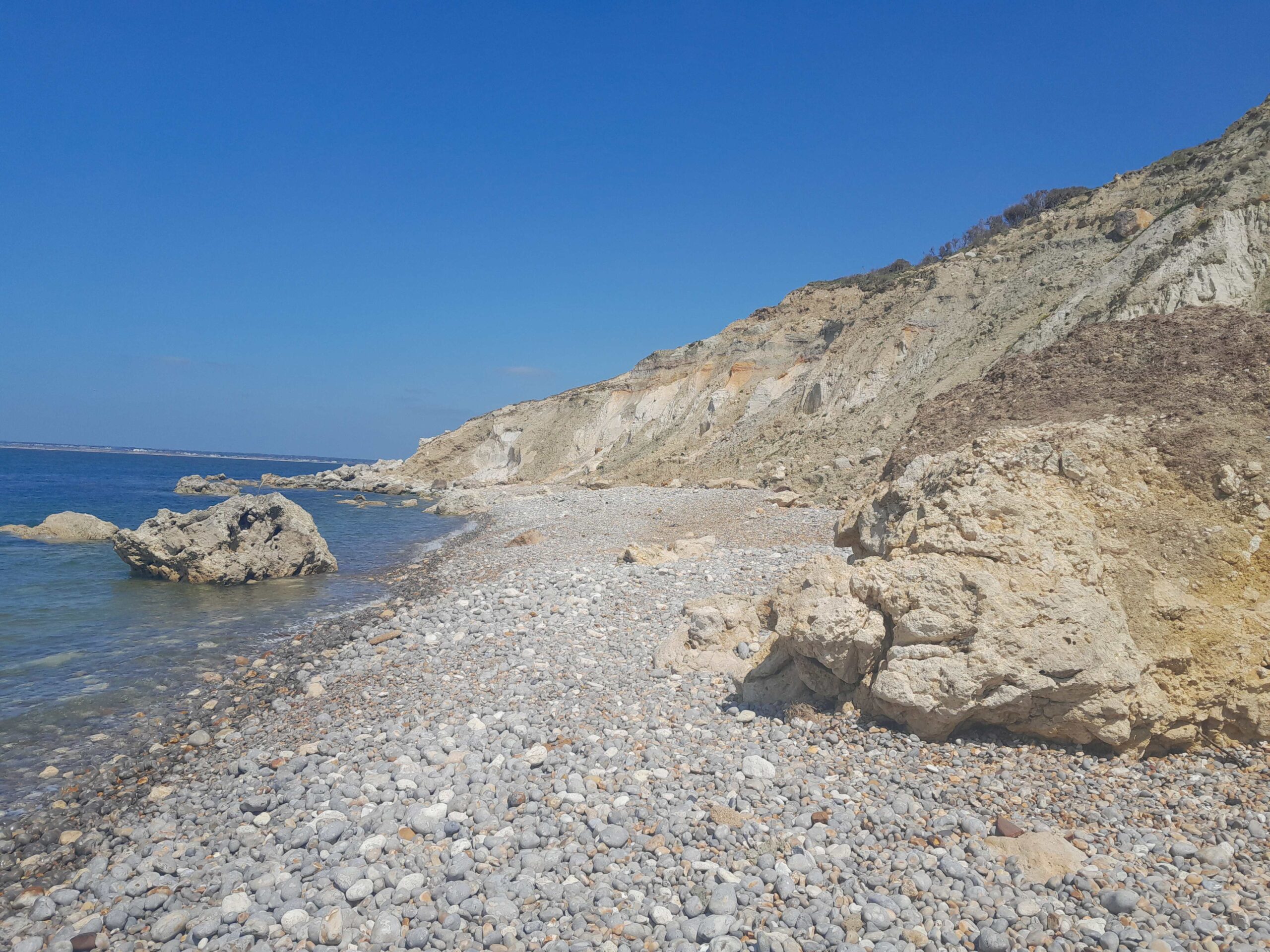
Such was the case earlier this year when RAB was commissioned to assess a section of coastline on the Isle of Wight to evaluate erosion susceptibility, current retreat rates, and recommend appropriate maintenance and remedial actions.
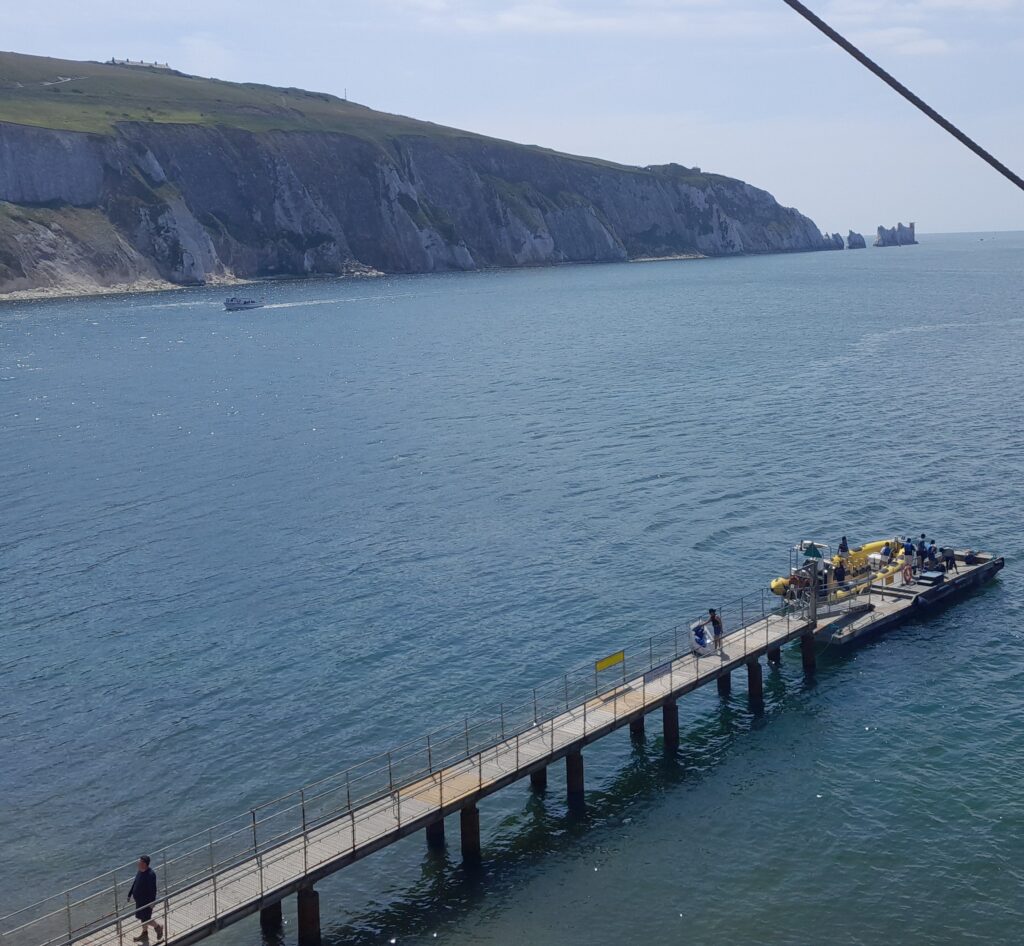
Our engineer, Josh, conducted a detailed condition assessment of the cliff sections, following the One Business Condition Assessment Manual and current industry best practices.
RAB undertook a review of the recently published NCERM (National Coast Erosion Risk Mapping) data to evaluate the currently accepted estimate of coastal retreat and compare historic and present data achieve a holistic understanding of future erosion risk.
The site visit and subsequent analysis of available data provided:
- A comprehensive report summarising historical coastline retreat
- Broad assessment of bedrock geology present and erodibility
- Key findings from the on-site survey
- Insights into likely future retreat patterns
- Recommended best practices for ongoing management
Given the area’s designation as an Area of Outstanding Natural Beauty (AONB), whereby, the area is recognised for its significant landscape value and natural beauty, a sensitive monitoring-led approach was advised.
A number of options were considered with varying degrees of intrusion. Slope stabilisation methodologies were evaluated to identify high level cost and effectiveness for stabilising the section of coastline. Hard engineered approaches, such as large-scale sea walls were considered but rejected due to the visual impact this could have on the area.
Similarly, other slope stabilisation methods, including mesh coverings were considered and identified as a reasonable approach in this area that maintains the aesthetic, whilst providing slope stabilisation benefits. However, given the estimates of coastal retreat for this section, intrusion was not considered appropriate at this time and development of a monitoring programme would enable high resolution data to inform future decision making by evaluating retreat rates over a known timeframe with increased detail.
Productive discussions with the client also enabled RAB to offer expert advice and connect them with useful contacts for long-term monitoring and surveying support.
RAB deliver a wide range of asset inspection, management, and engineering services for both public and private sector organisations. More information is available here on our website, or you can get in touch for an informal discussion on your specific project by email to enquiries@rabconsultants.co.uk or call our head office in Lichfield on 0330 223 6475.