

Will Hammond, Assistant Flood Risk Management Engineer at RAB, recently attended an event ran by a partnership between CIRIA, Mansfield District Council and CIWEM. The event explored Mansfield’s Green Recovery Sustainable Flood Resilience scheme which involved retroactively fitting various SUDS measures across the town. The event took place at Mansfield District Council before looking at SUDS (Sustainable Urban Drainage Systems) measures at numerous sites, discussing criteria for their choice of Mansfield as the target catchment, and how local sites were determined and finally additional considerations when optimising the measures. Mansfield has the greatest modelled flooding volume per population equivalent in Severn Trent’s major catchments, and this is likely to increase by nearly 60% through to 2050 (Severn Trent). This translates to much of Mansfield town centre, including the market square, being at high risk of surface water flooding with 3.3.% chance in any given year (Environment Agency).
Background
Mansfield, the largest town in Nottinghamshire excluding Nottingham, is situated in the west of the county within the catchment of the River Idle. A tributary of the Idle, the River Maun, flows directly through central Mansfield. Central Mansfield is bowel shaped, with the town centre located in the centre of the bowel. A combination of the town’s proximity to the River Maun, the topography and large presence of impermeable surfaces throughout Mansfield make the town particularly susceptible to flooding – particularly pluvial/surface water flooding.
As a result of its current high susceptibility to flooding, the pressing need to future proof the region for increased rainfall and the need for investment to rejuvenate the town, Severn Trent Water deemed Mansfield the top candidate for a retrofit SUDS scheme. Not only does the scheme improve flood risk and resilience to Mansfield but enhances the aesthetic local amenity space – adding deep greens and vibrant yellows and purples to an otherwise grey and brown town façade. The scheme should continue to stimulate the economy from ongoing maintenance as well as the initial economic boost from the construction of the scheme. At the same time, these SuDS measures help improve water and air quality by filtering runoff, while the vegetation within them captures airborne pollutants and supports greater biodiversity
The scheme, which extends from Warsop in the north to Berry Hill in the south, includes 4 principal intervention types: permeable paving, rain gardens, bioswales (vegetated storage areas) and detention basins. The site day toured around various examples of the 4 measure types from the town centre to suburban areas such as Mansfield Woodhouse.
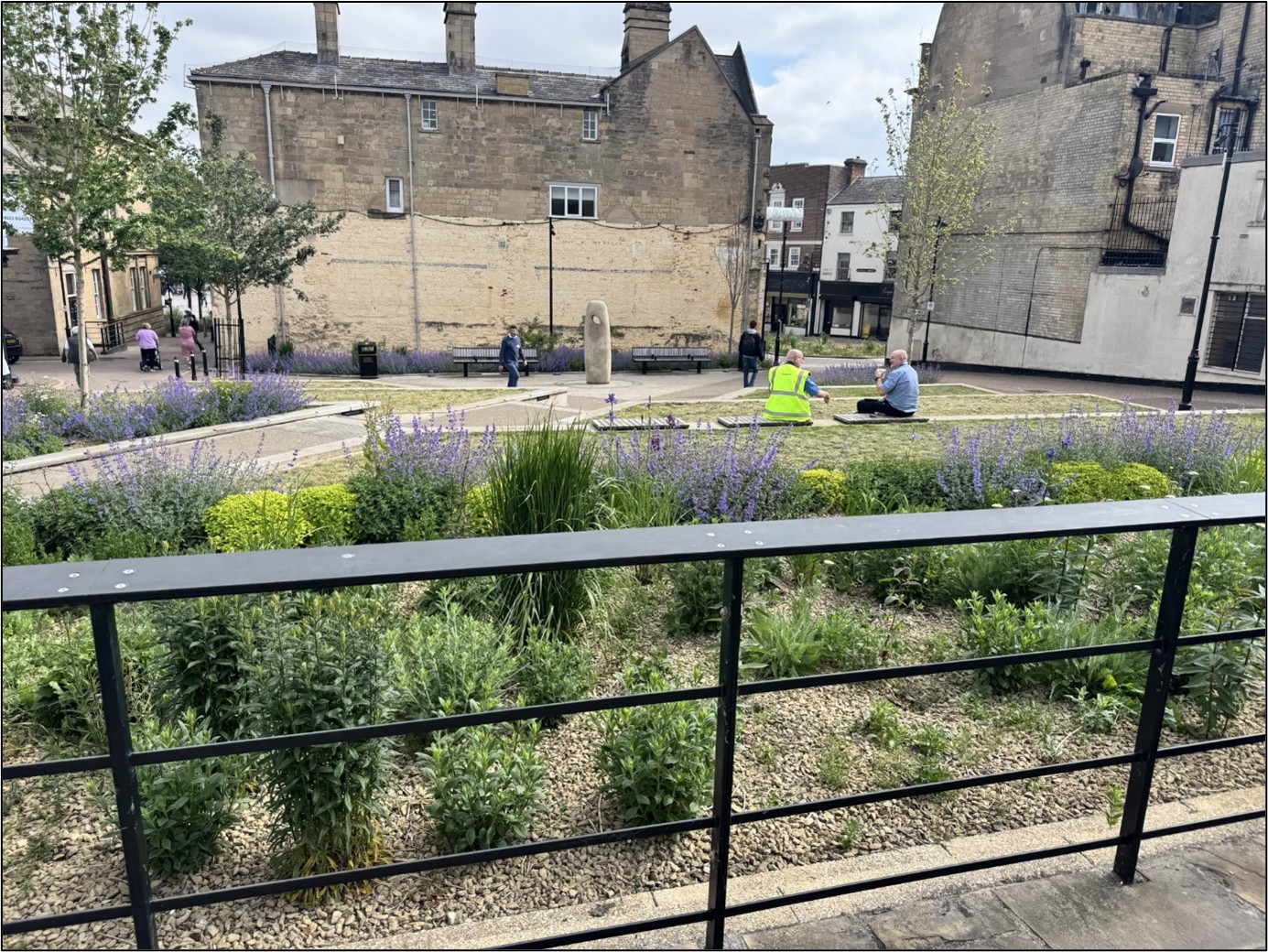
One key, standout example was a system of cascading rain planters adjacent to the bus station. This was fitted in place of an old car park, providing 180 cubic metres of storage, converting the original area into a flourishing, green leisure space incorporating seating and footpaths.
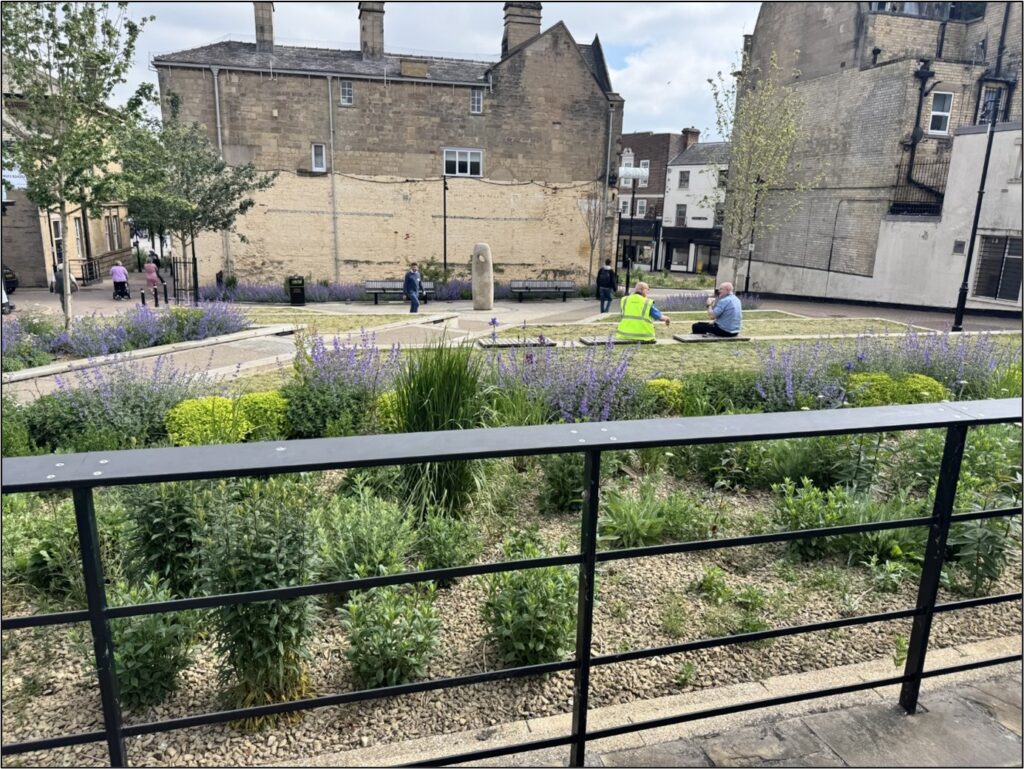
These cascading planters increase water attenuation and intercept surface water, relieving pressure on surface water drains, enhancing groundwater recharge for the underlying aquifer and preventing runoff from flooding the town centre.
Careful consideration was placed on vegetation type to ensure the SUDS planters had the best chance for survival without compromising their effectiveness in a changing climate. Plants were drought tolerant and encouraged water infiltration and interception. This cascading system was chosen to include vegetation and soil that was as close to native as possible, aligned with the Council’s maintenance strategy; and would also be drought tolerant due to the lack of moisture storage capacity of the underlying gravel.
Other interventions viewed on the tour included a verge raingarden near Forest Town, a detention basin in Forest Town as well as a bioswale. Intervention types were carefully chosen after consultation with the locals, depending on requirements of the local area. For example, verge rain gardens are preferable to permeable paving as they are more effective and cost efficient but given the need for on street parking, permeable paving is sometimes chosen. Bioswales and detention basins are preferable over verge rain gardens and permeable paving due to their greater storage capacity, however they have a larger footprint therefore implementation is limited to fewer sites. To further increase their effectiveness, bioswales in the scheme were tweaked in a simple, cost effective and innovative manner to maximise infiltration rates. Wooden check dams were placed in some of the bioswales on slopes in order to allow for even water distribution in the measures rather than allowing water to pool at the lowest section of the swale.
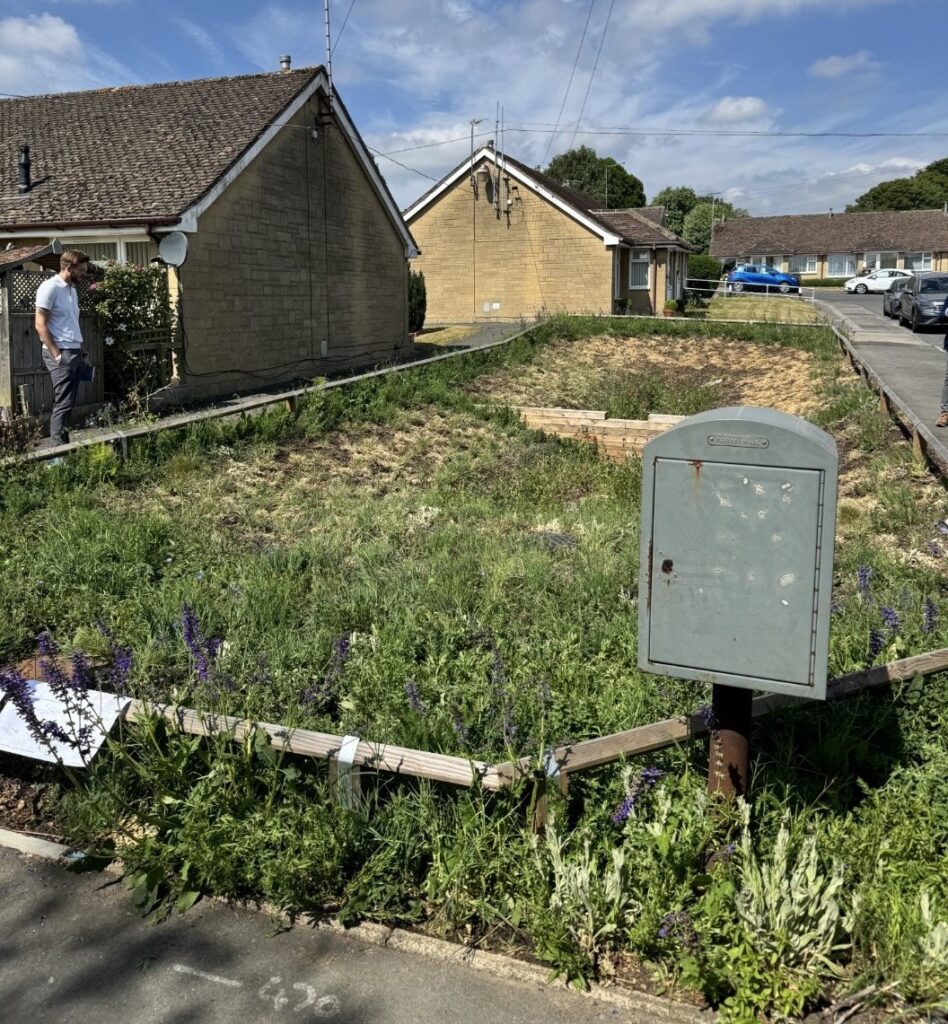
Bioswale with check dam in Forest Town
Outcomes
In total, 343 separate SUDS interventions were implemented across the town, collectively providing over 31,000 cubic metres of surface water storage. Their effectiveness has been demonstrated first hand as they were tested by Storm Babet in winter 2023. The measures implemented at this stage reached capacity due to intense rainfall during the storm event; however, they successfully prevented flooding of the public highway. This is the only time measures have reached capacity, highlighting the success of the scheme first hand.
As well as directly reducing flood risk, a key outcome of the scheme was its role in the development of new design standards for Severn Trent retrofit SUDS. The first version of these standards was introduced in 2022, with seven formal iterations completed to date and several more informal sub-iterations informing the design evolution. Mansfield will act as a blueprint, allowing for future projects to be implemented efficiently, paving the way for schemes in other towns in the Severn Trent Service area, such as Lichfield – the home of RAB – or beyond into other water service regions.
Our teams here at RAB provide similar services including drainage design and flood risk management. If you are interested in implementing SUDS or Nature Based Solutions in your local district council or any other private land development project, please contact us at enquires@rabconsultants.co.uk or call our head office at 0330 223 6475.