

Overview: Our client embarked on an ambitious project to redevelop the St. Peter and St. Paul Church of England Infant School in Caterham, Surrey. This initiative aimed to increase the school’s capacity by installing a new building with associated amenity space and parking area. RAB was appointed to develop a surface water drainage design suitable for full planning.
Site Details: The site, spanning 0.89 hectares, is situated in a low flood risk area (Flood Zone 1). The existing infrastructure included three soakaways, whose reliability and capacity were uncertain. The development proposal involved extending the main school building, increasing the hardstanding area by 0.087 hectares.
Drainage Strategy: RAB Consultants devised a robust drainage strategy incorporating Sustainable Drainage Systems (SuDS) to manage surface water runoff effectively. The strategy included the following key components:
- Blue/Green Roof:
- A combination of vegetation and drainage layers to intercept and store rainwater.
- Attenuation layer with a 100mm depth, providing significant storage capacity.
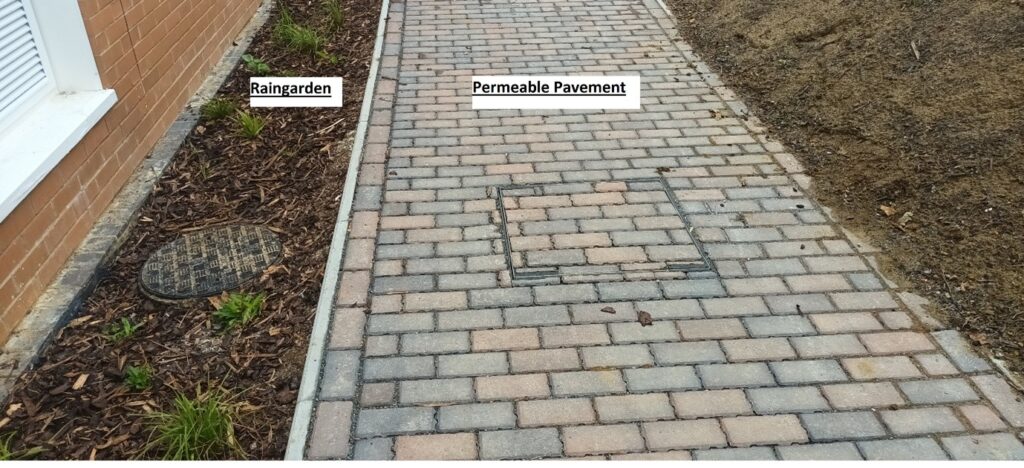
- Permeable Paving:
- Utilized for the new footpaths, allowing water to infiltrate and be stored in the sub-base.
- Designed to manage both footpath and roof runoff, enhancing water quality and reducing runoff volume.
- Raingardens:
- Positioned between the permeable paving and the building to add biodiversity and provide additional storage.
- Designed to receive controlled roof runoff, further enhancing the site’s ecological value.
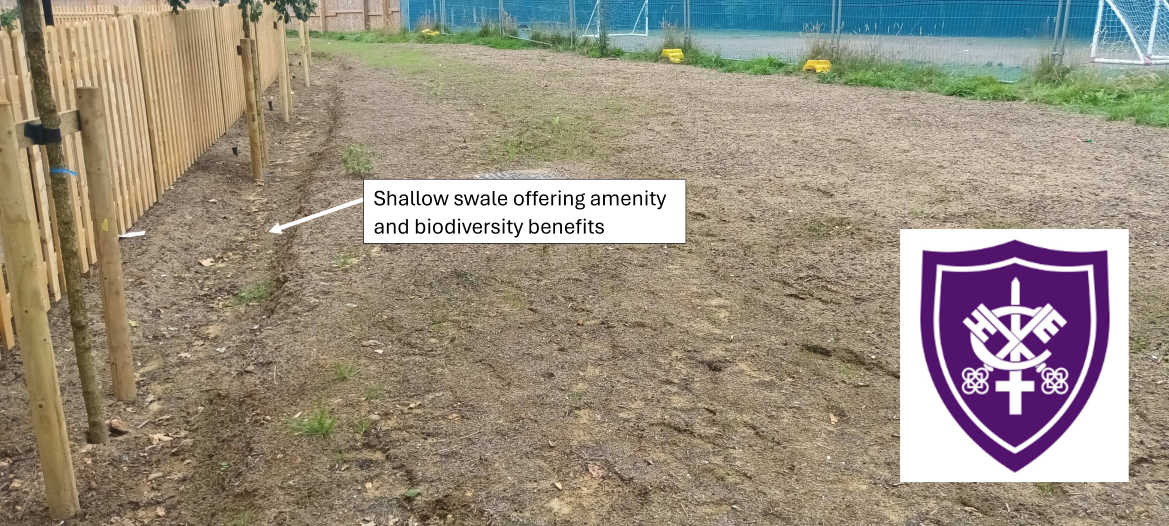
- Swale:
- Implemented at the north edge of the playing field to capture and convey greenfield runoff.
- Designed to integrate seamlessly with the surrounding landscape, promoting natural water infiltration.
Proposed Discharge: Given the site’s soil conditions and high groundwater table, infiltration was not feasible. The only viable discharge option was into the Thames Water foul water sewer on the access road, with a controlled discharge rate of 1l/s. This approach ensured compliance with local regulations and minimized the risk of flooding.
Verification: A verification review for the drainage system was also conducted to ensure compliance with the design specifications and planning conditions.
Key Findings:
- CCTV Survey Insights:
- Defective Pipe Connection: A section of pipe downstream of chamber S1US had an unapproved connection causing debris accumulation. This was rectified by removing the connection and replacing the affected pipe section.
- Pipe Deformations: Two sections of pipe showed deformations. The contractor assessed these deformations as non-detrimental to the system’s performance.
- Discrepancies in Chamber Depths:
- Several chambers had discrepancies between the design and actual depths. These were attributed to necessary level changes during construction.
- Residual risks associated with these discrepancies were identified, including potential impacts on pipe integrity and flooding risks.
- Overall Compliance:
- The implemented drainage system largely conformed to the design in terms
of configuration, location, and sizing of SuDS features, chambers, pipes, and
flow controls.
- The implemented drainage system largely conformed to the design in terms
Lessons Learned:
- Importance of Detailed Verification: The verification process highlighted the critical role of detailed inspections, including CCTV surveys, to identify and rectify defects that could impact long term performance.
- Flexibility in Design Implementation: The need for adjustments during construction, such as changes in chamber depths, underscores the importance of flexibility and adaptive management in project execution.
- Effective Communication and Documentation: Clear communication between the contractor and the design team, along with comprehensive documentation, was essential in addressing and resolving issues promptly.
- Proactive Maintenance Planning: Identifying residual risks and establishing a proactive maintenance schedule were crucial for ensuring the long-term operational efficiency of the drainage system.
Value added: The project not only addressed the immediate drainage needs but also enhanced the site’s ecological value and resilience to future climate challenges.
RAB deliver a wide range of flood risk management and resilience services for both public and private sector organisations. More information is available here on our website, or you can get in touch for an informal discussion on your specific project by email to enquiries@rabconsultants.co.uk or call our head office in Lichfield on 0330 223 6475.